


When it’s time to resurface your pool, you aren’t just picking a color—you are choosing the “skin” of your backyard oasis. In Dallas, this is a critical decision. Between our mineral-heavy municipal water and the intense heat of a North Texas summer, your pool surface has to be more than just pretty; it has to be technically superior.
Today, we are breaking down the three primary categories of pool finishes: Traditional Plaster, Quartz, and Pebble. While all three are common in the industry, at Refresh Pool Company, we’ve chosen to focus exclusively on high-performance aggregate finishes. Here is the technical breakdown of why material choice matters for the lifespan of your pool.
The Baseline: Traditional White Plaster
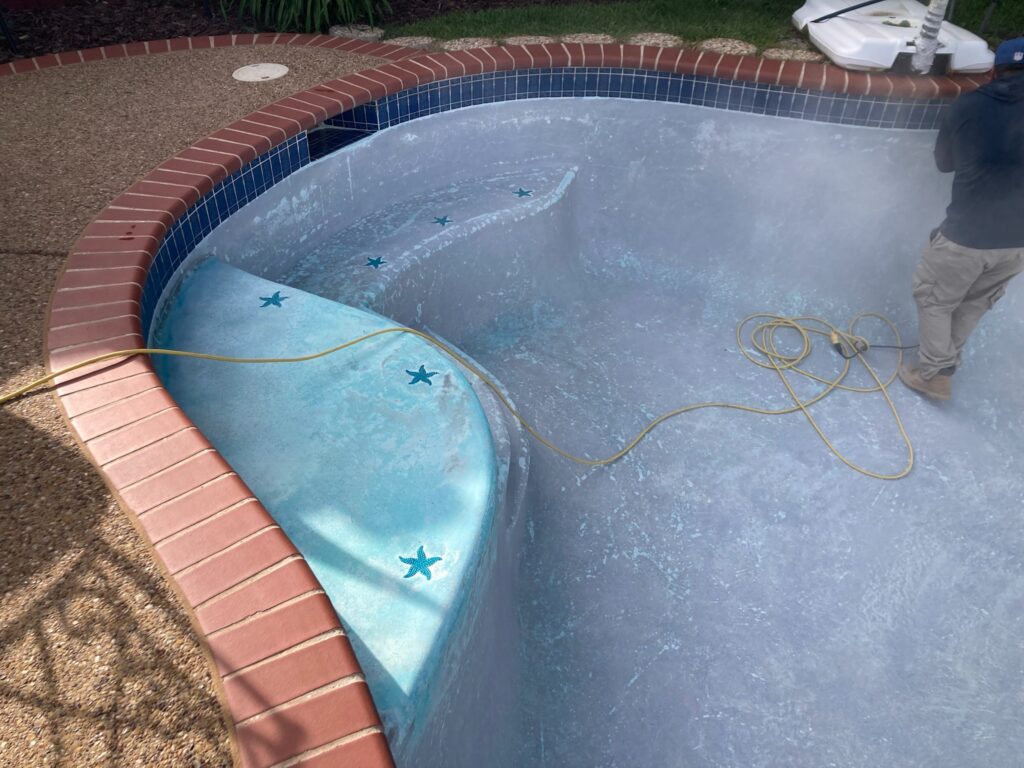
For decades, white plaster (often called “marcite”) was the industry standard. It is a simple mixture of white Portland cement, water, and marble dust. That said, as time has gone on and they stopped “making things like they used to”, the overall quality of White Plaster has degraded significantly.
While it is still an option on the market today, we often do not offer white plaster.
Why it’s an option: It provides a classic, smooth-to-the-touch finish and the lowest upfront cost of any resurfacing material.
Why we do not offer it: We have decided to move away from traditional white plaster. Technically speaking, marble dust is a “soft” aggregate, rating only a 3 on the MOHS Hardness Scale. In the harsh DFW climate, this soft surface is highly susceptible to etching, staining, and “mottling” (uneven shading). While it is an economical choice, it often requires resurfacing again in just 3 to 5 years, making it a poor long-term investment for our customers.
The Mid-Performance Choice: Quartz Finishes
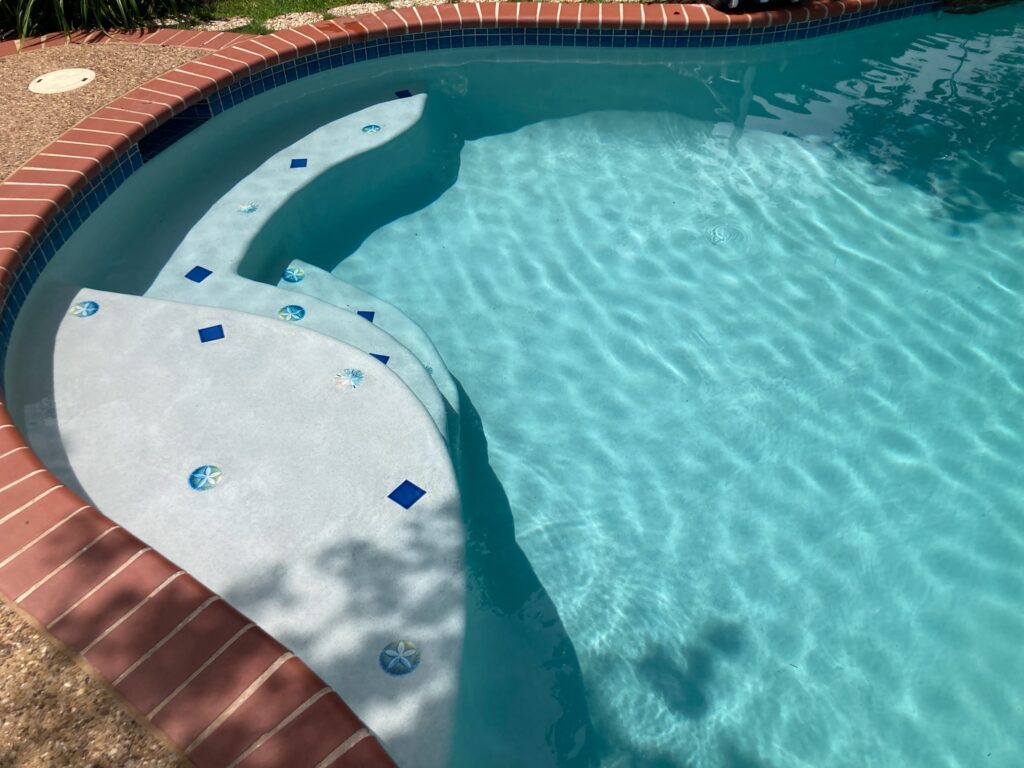
If you want a smooth surface but need significantly more durability than standard plaster, we recommend a Quartz Finish. This finish replaces soft marble dust with crushed quartz aggregate, and we choose to use NPT Quartzscapes as our preferred brand. We like Quartz because it’s a good middle-ground: Not a bank-breaker, but also a much better use of your money.
Technical Benefits of Quartz
Quartz is one of the hardest minerals on earth, rating a 7 on the MOHS scale.
- Enhanced Durability: Because quartz is harder than marble, it is much more resistant to the corrosive effects of imbalanced water chemistry.
- UV Resistance: Unlike dyed plasters that fade, QuartzScapes uses ceramic-coated crystals that are kiln-fired with pigment, ensuring your color stays vibrant under the Texas sun. That said, darker Quartz finishes do tend to lose their pigment over time, which is why we recommend a lighter color.
- Smooth Yet Strong: It offers a practical middle ground—it feels nearly as smooth as traditional plaster but has a life expectancy of 10 to 15 years.
The Ultimate Standard: Pebble Finishes
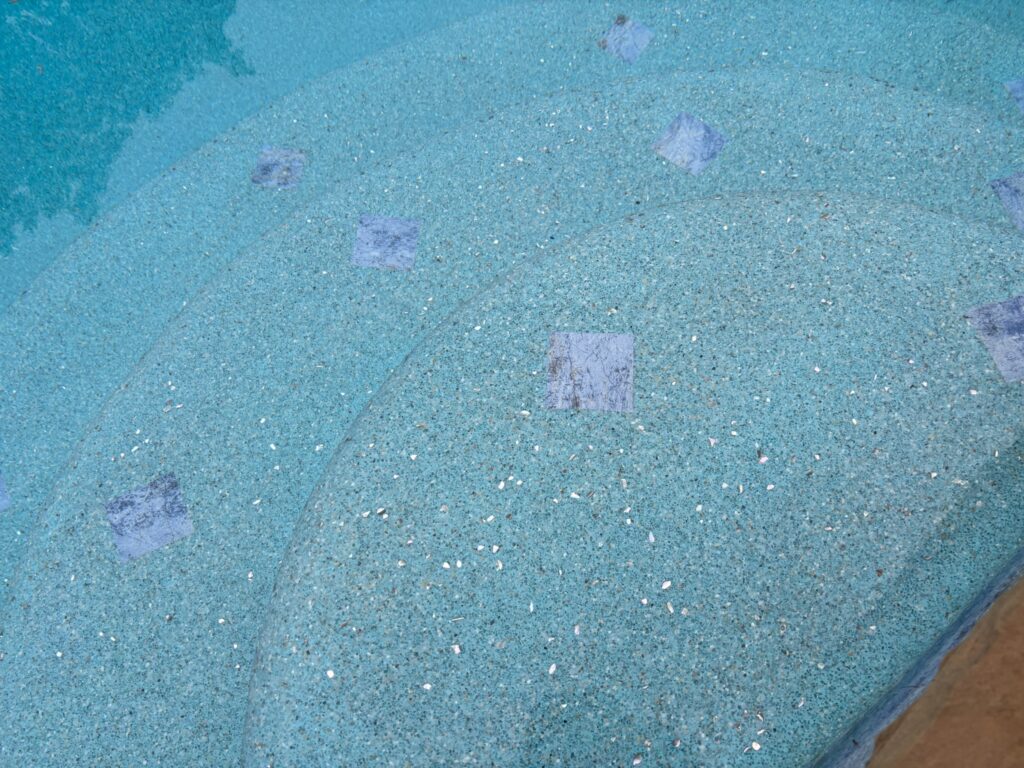
For homeowners who want the most resilient finish on the market, our preferred choice is a Pebble Finish. This is a fortified aggregate finish that utilizes natural, rounded river pebble, and similarly to Quartz, we use NPT’s Stonescapes as our preferred brand. Pebble is a great all-around choice, and if properly maintained, can last up to 25 years!
Is It Going to be Too Rough?
Many homeowners worry that pebble finishes will be too rough. We understand the concern, and generally if roughness is a major decision point, we recommend Quartz. With that, there is a happy medium with pebble called Mini Mebble, which is generally much less rough than Regular Pebble. Mini Pebble is superior to Regular Pebble in regards to:
- Tighter Nesting: Smaller pebbles pack closer together, which means there is less exposed cement paste and more exposed stone. Since stone is chemically inert, it won’t react to pH swings or hard water.
- Texture: Mini pebbles provide a refined, slip-resistant texture that feels like a natural stream bed underfoot—offering comfort without sacrificing the “industrial strength” of a pebble finish.
The DFW Factor: Water Hardness and Soil Movement
Why do we prioritize these specific NPT finishes? Because Dallas water is notoriously hard. High calcium levels in our tap water naturally want to “climb” into the pores of your pool finish. High-performance aggregates like quartz and pebble are much denser and less porous than standard plaster, meaning they resist mineral buildup and calcium scaling far more effectively.
Furthermore, our Blackland Prairie clay soil causes constant structural movement. The fortified cement used in StoneScapes and QuartzScapes is engineered with better “flexural strength” than cheap plaster, helping your finish survive the subtle shifts of the North Texas ground.
Find the Right Finish for your Pool
Your pool should be an investment that lasts for decades, not just a few seasons. Whether you choose the shimmering elegance of QuartzScapes or the natural durability of StoneScapes Mini Pebble, you are choosing a finish designed to handle the reality of Texas pool ownership.
Ready to see the samples in person? Contact us today at (972) 325-8132. We’ll walk you through the technical specs and help you choose the perfect “skin” for your backyard retreat.